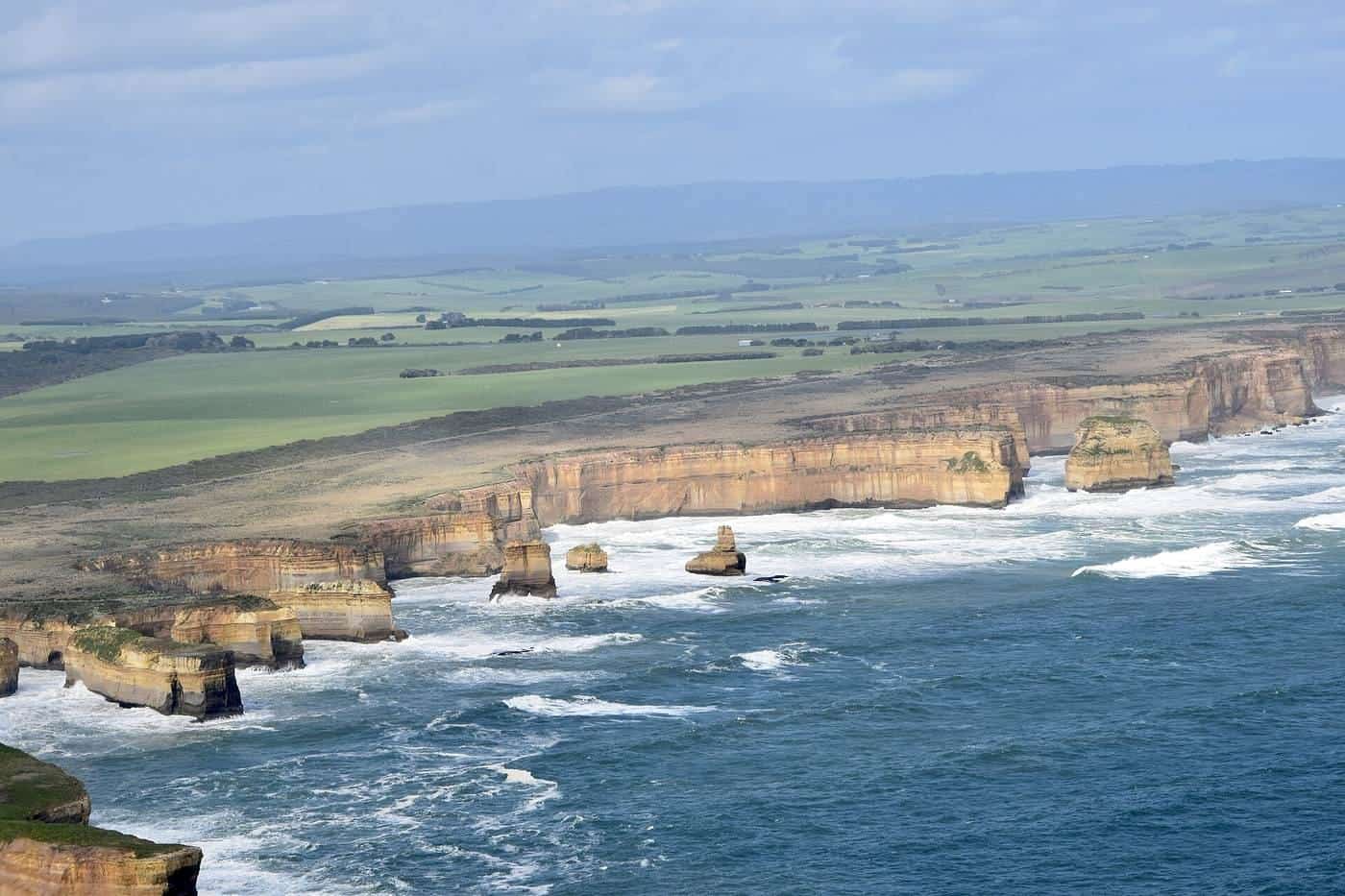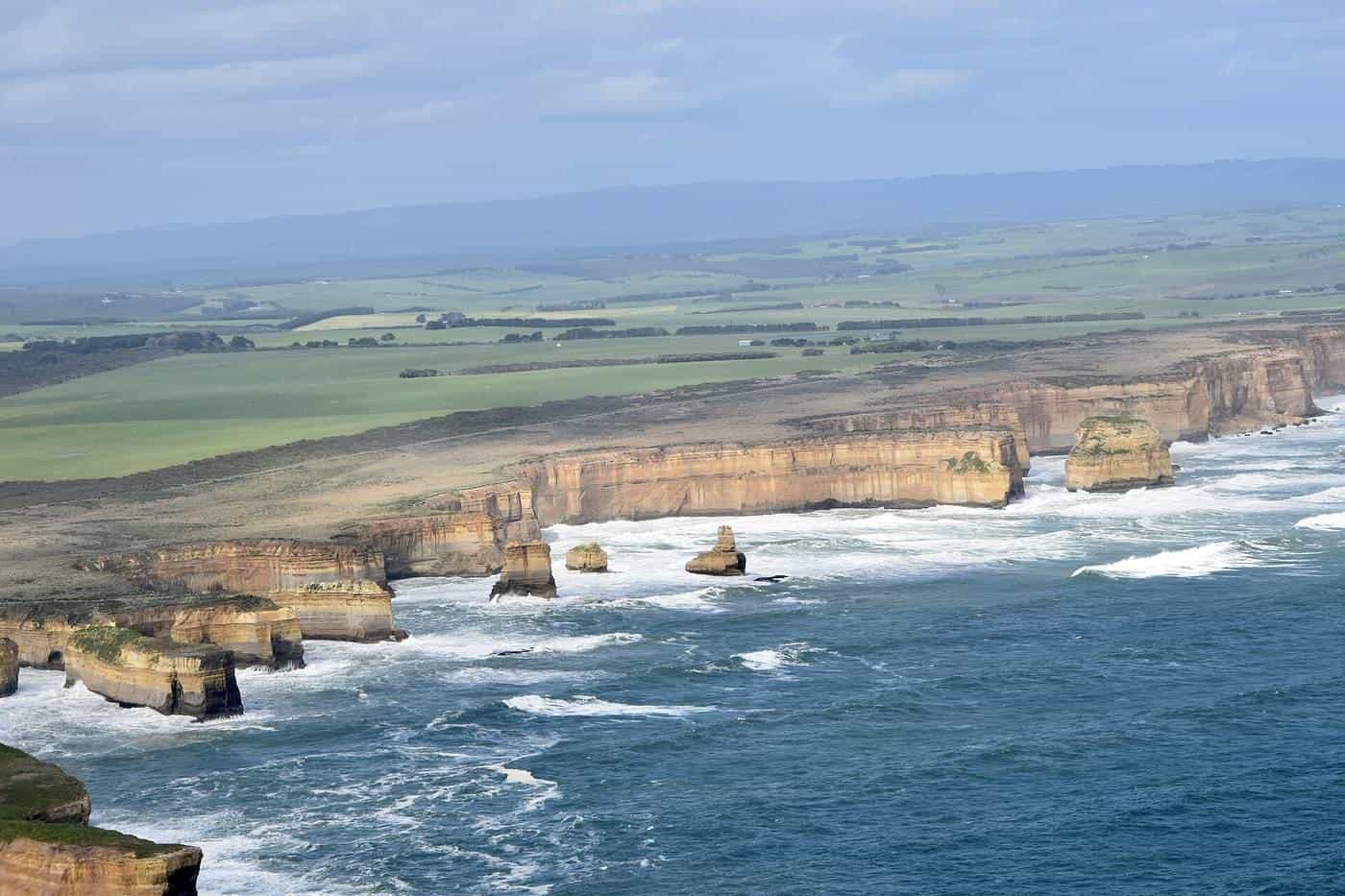
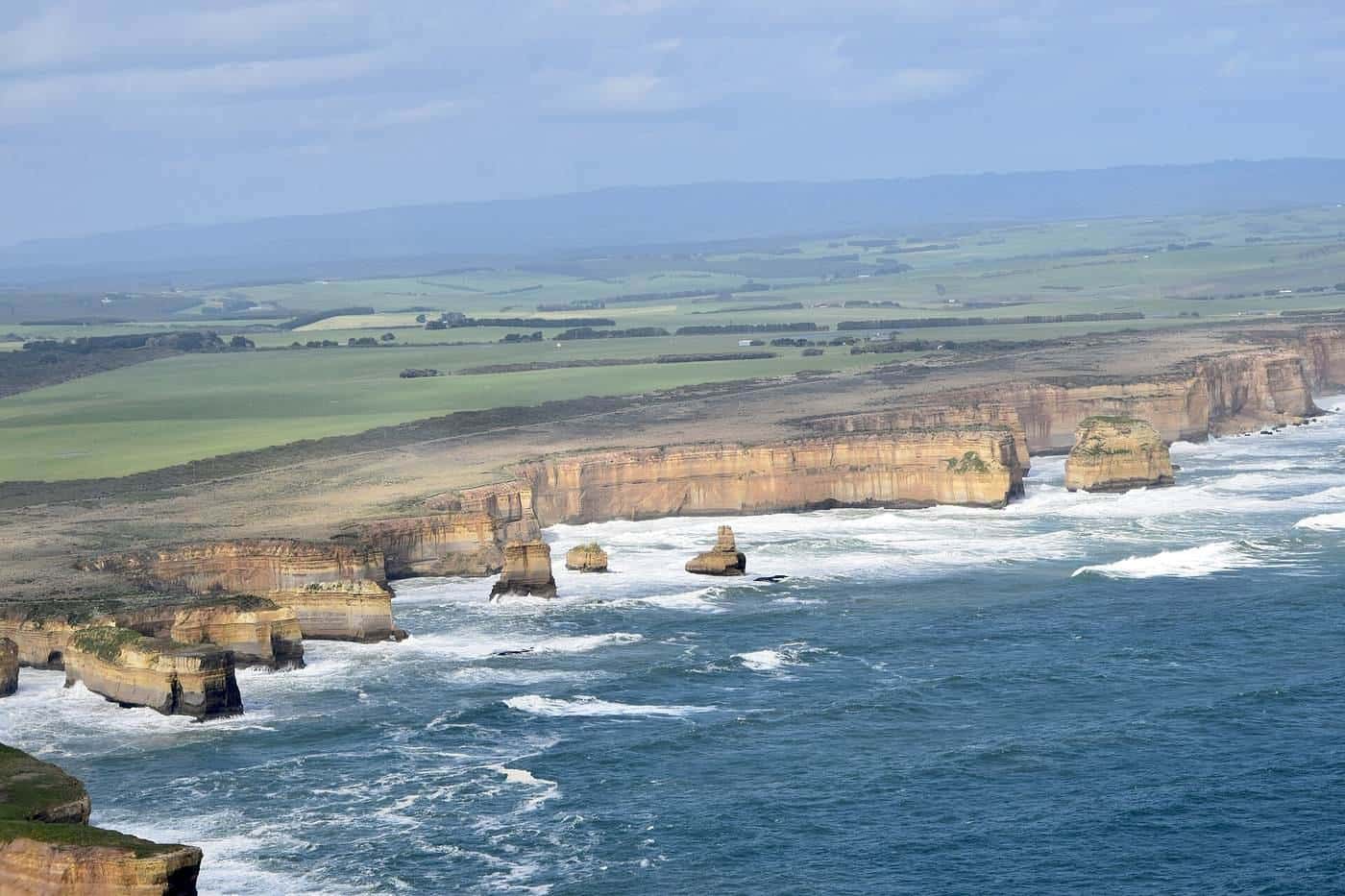
The Twelve Apostles are a group of limestone stacks rising from the Southern Ocean off the coast of Port Campbell National Park in western Victoria. They're the most famous sight on the Great Ocean Road, and a helicopter flight is one of the most popular ways to see them. From the air, you see not just the stacks but the sweep of sheer cliffs, gorges, arches and islands along the Shipwreck Coast.
This guide covers what you'll see, how the stacks formed and continue to change, flight options, the weather and practical tips.
1919–1932
Great Ocean Road built
Largely by returned soldiers
2005
A stack collapsed
Erosion continues
1990
London Bridge collapsed
Now London Arch
How the stacks formed
The coast here is made of soft limestone, laid down under the sea millions of years ago. Southern Ocean waves pound the cliffs, carving caves that become arches, and arches that collapse to leave isolated stacks. The same process that created the Apostles is slowly destroying them: stacks continue to erode and occasionally collapse, as one did in 2005, while new ones may form from the cliffs.
Despite the name, there were never exactly twelve stacks. The site was once known as the Sow and Piglets, and the more marketable name "The Apostles" was adopted later.
What you'll see
- The Twelve Apostles: the remaining stacks rising from the surf below towering cliffs.
- Loch Ard Gorge: a narrow gorge named after the clipper ship Loch Ard, wrecked nearby in 1878. Only two people survived.
- London Arch: formerly London Bridge, whose landward arch collapsed in 1990.
- The Arch and the Grotto: other rock formations shaped by the sea.
- The Bay of Islands and Bay of Martyrs: on longer flights, further west, with many more stacks and islands.
- The Shipwreck Coast: a stretch of coast where many ships were wrecked in the nineteenth and early twentieth centuries.
Flight options
- Short flights over the Twelve Apostles and nearby formations.
- Longer flights including Loch Ard Gorge, London Arch and the Bay of Islands.
- Extended flights along more of the Great Ocean Road.
- Packages from Melbourne combining transport and a flight.
Operators publish their routes and flight times. Check exactly what's included before you book.
Weather on the Shipwreck Coast
The coast faces the Southern Ocean and the prevailing westerly winds. Weather can change quickly, with strong winds, low cloud, rain and sea fog. Helicopter flights operate under visual flight rules, so low cloud, poor visibility and strong winds can delay or cancel flights. Flexibility helps; if you can, book early in your visit so you can reschedule.
When to go
Flights operate year-round, weather permitting.
- Summer (December to February): warmer, longer days and peak visitor numbers.
- Autumn (March to May): often calmer, settled weather.
- Winter (June to August): cold, wet and windy, with dramatic seas, but also some clear, crisp days.
- Spring (September to November): changeable weather and wildflowers.
Driving the Great Ocean Road
The Great Ocean Road runs about 240 km between Torquay and Allansford, near Warrnambool. It was built between 1919 and 1932, largely by soldiers who had returned from the First World War, and is dedicated to those who died in that war. Allow time to drive it slowly, with stops at lookouts, beaches and towns. The road is winding, and fatigue and distraction contribute to crashes, so take breaks.
Photography tips
- Wear dark clothing to reduce window reflections.
- Morning and late afternoon light is often best.
- Bring a lens cloth; sea spray and condensation can affect windows and lenses.
Twelve Apostles flight checklist
0 of 6 done
Ticks are saved in this browser only.
Common mistakes
- Expecting to see twelve stacks.
- Booking a flight at the end of a long drive, with no flexibility for weather.
- Underestimating how cold and windy the coast can be.
Gibson Steps and the beach
Below the cliffs near the Twelve Apostles, the Gibson Steps lead down to the beach, where you can see two of the stacks at sea level. Combining a flight with a walk on the beach gives you two very different perspectives. The beach can be dangerous in big seas and at high tide, so check conditions and stay well back from the water.
Wildlife
Southern right whales visit the coast in winter, and seabirds such as short-tailed shearwaters nest on nearby islands. Little penguins live in the area too. Aircraft must keep minimum distances from whales.
The Shipwreck Coast
The coast between Cape Otway and Port Fairy is known as the Shipwreck Coast because of the many ships wrecked there in the nineteenth and early twentieth centuries, as vessels approached Melbourne through Bass Strait. Museums, lookouts and walking trails tell the stories of these wrecks, including the Loch Ard.
Getting there
The Twelve Apostles are roughly 275 km from Melbourne via the Great Ocean Road, or less via inland routes. Allow a full day each way if you drive the coast road with stops. Many visitors stay overnight in Port Campbell or nearby towns.
Flying from Melbourne
Some operators offer helicopter flights from Melbourne to the Great Ocean Road, returning the same day. These are expensive but save many hours of driving. Check what's included, including time on the ground.
Combining with the drive
Many visitors drive the Great Ocean Road and stop for a flight near the Twelve Apostles. Allow time for the flight, check-in and possible weather delays, and avoid tight connections with accommodation or other bookings.
Seasons on the coast
The Great Ocean Road is exposed to weather from the Southern Ocean. Winter brings cold fronts, wind, rain and big swells, which can be dramatic from the air but may also cancel flights. Summer is often more settled but brings crowds and, at times, sea fog and bushfire smoke. Spring and autumn can offer good conditions with fewer visitors. Wherever possible, build flexibility into your plans, and be ready to fly when the weather allows. Sunset flights can be spectacular, but they're also popular, so book ahead.
Key points
A helicopter flight over the Twelve Apostles reveals the scale of the Shipwreck Coast's stacks, gorges and cliffs. Be flexible with weather, check routes and inclusions, and allow time to drive the Great Ocean Road safely.
Frequently asked questions
How many of the Twelve Apostles are left?
There were never exactly twelve stacks. Waves have eroded and collapsed several over time, including one in 2005. Today, a handful of stacks remain visible from the main viewing area, and the number changes slowly as erosion continues.
Where do Twelve Apostles helicopter flights leave from?
Flights commonly depart from helipads near the Twelve Apostles and Port Campbell. Some operators also offer longer flights from other towns along the Great Ocean Road and from Melbourne.
How long are Twelve Apostles flights?
Flights range from short loops over the Twelve Apostles to longer flights taking in Loch Ard Gorge, London Arch, the Bay of Islands and beyond. Check exact flight times and routes with the operator.
What happened to London Bridge?
London Bridge was a double-arched rock formation near Port Campbell. In 1990, the arch connecting it to the mainland collapsed, leaving two tourists stranded on the outer section until they were rescued by helicopter. It's now called London Arch.
When is the best time for a flight?
Flights operate year-round, weather permitting. Calmer, clearer days are best, which can occur in any season. The Southern Ocean coast is exposed to strong winds and changeable weather, so flexibility helps.
Who built the Great Ocean Road?
The Great Ocean Road was built between 1919 and 1932, largely by soldiers returned from the First World War, and is dedicated to those who died in the war.
Sources and further reading
Facts on this page were checked against these primary and official sources. Conditions change — confirm before you travel or buy.
- Port Campbell National Park — Parks Victoria
- Great Ocean Road — Wikipedia
- The Twelve Apostles — Wikipedia
- Civil Aviation Safety Authority — Australian Government