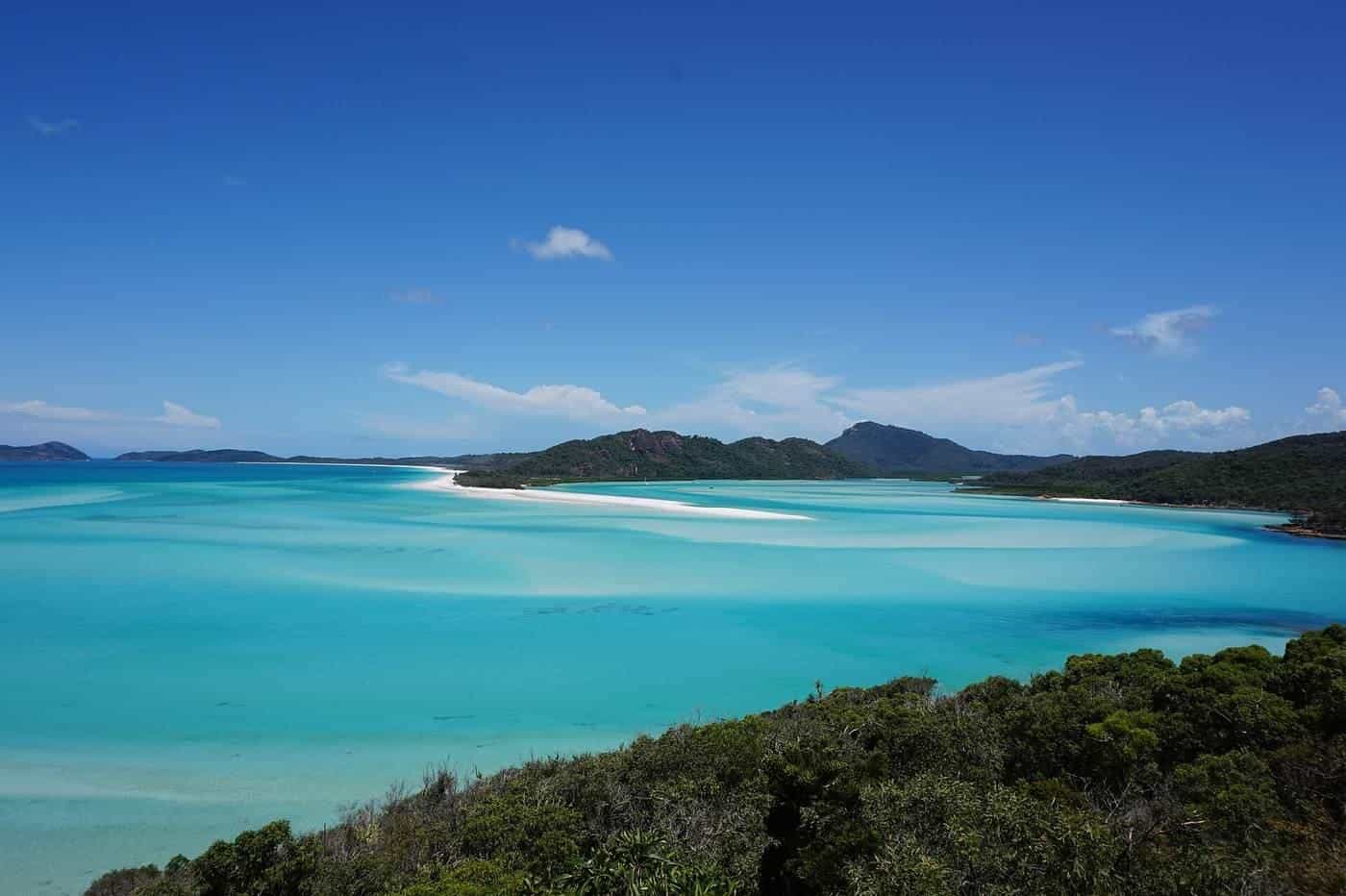
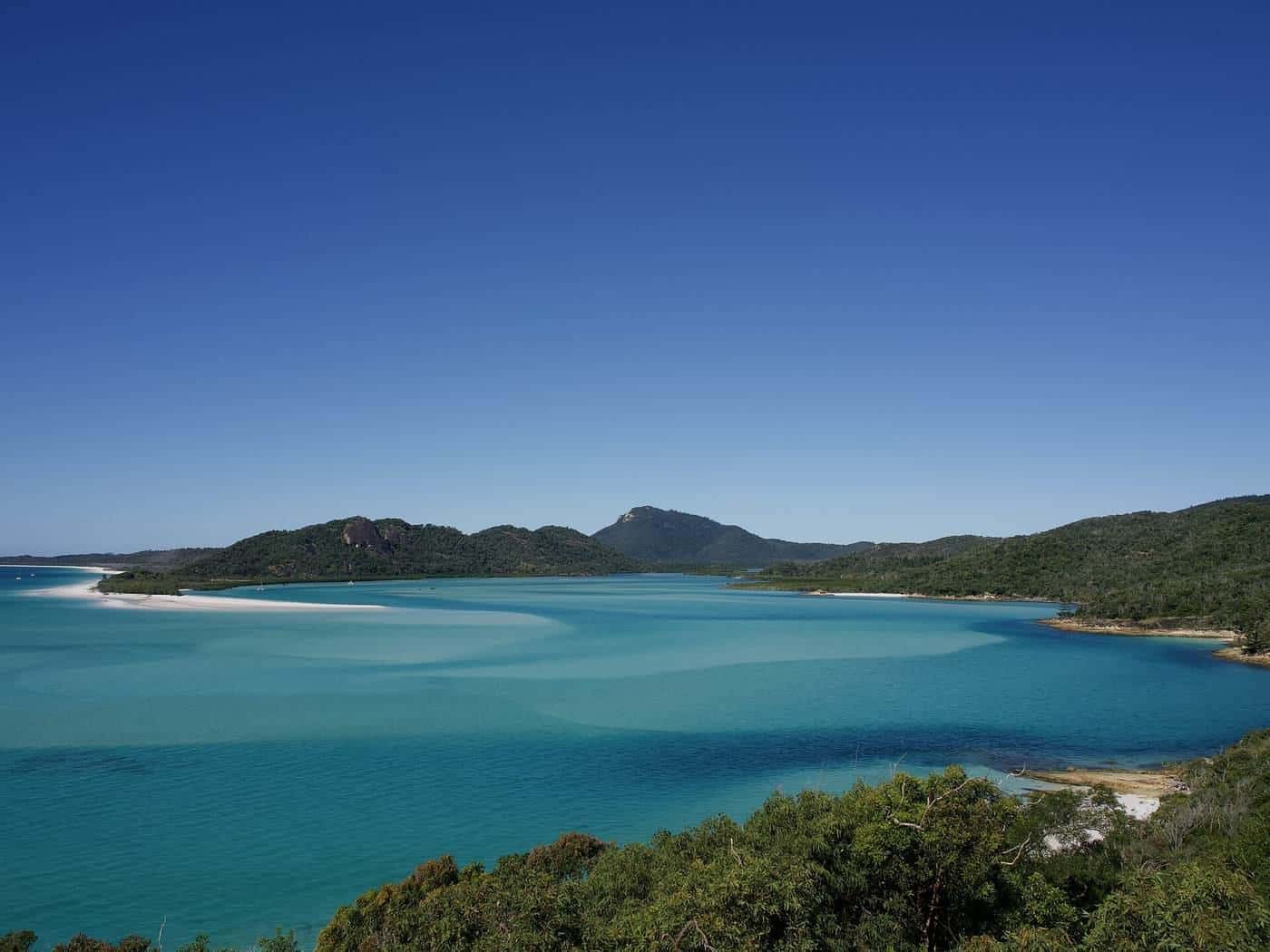
Queensland’s tourism story for the Whitsundays is white beach, turquoise water and reef. That story is true enough from a hill on Whitsunday Island. It becomes a map from a helicopter: channels, fringing reef, the swirl of Hill Inlet at the northern end of Whitehaven, and, on products that go there, the small reef formation marketed as Heart Reef.
The Great Barrier Reef is on the World Heritage List. The Great Barrier Reef Marine Park Authority is the Australian manager of the marine park. Scenic flying is tourism inside that system, not a private sky.
GBRMPA
Marine park manager
World Heritage reef
Heart Reef
An aerial view
A protected formation, not a typical landing
Dry months
Usual planning window
Confirm on the day with the operator
Heart Reef, Hill Inlet, Whitehaven
Heart Reef sits in Hardy Reef. Its fame is the shape from above. Treat marketing language that sounds like you will stand on it with suspicion unless the operator can point to a permitted activity. The honest product is usually an overflight.
Hill Inlet is the other aerial celebrity: tidal sand bars painting turquoise against Whitehaven’s silica. Queensland’s public tourism material leans on that image for a reason. Timing relative to tide changes the photograph. No website, including this one, can promise the inlet will look like the postcard at 10:13 a.m. on your Tuesday.
Whitehaven from the air shows why the beach is a long white line rather than a cove. It does not replace a permitted beach landing or a boat if walking sand is what you wanted.
Cairns, Airlie, islands — different doors
Reef and Whitsunday scenic flying is sold from more than one door: the Whitsunday coast and islands, and further north the Cairns and Port Douglas reef scene, which is a related but not identical geography. A “reef flight” from Cairns is not automatically Hill Inlet. Name the landmarks you care about and see whether they are on the route.
We do not publish an operator directory. Ask who holds the AOC, where you board, and whether a pontoon landing is included or is a separate marine product.
Marine park manners
GBRMPA’s tourism framework, zoning, and wildlife approach rules sit under the flight even when the commentary is about colour. Island national parks add another land manager. Aircraft should not become a tool for crowding turtles, dugongs or nesting birds. If a product is sold as “wildlife”, ask how they comply with approach settings — including the Commonwealth whale-watching settings where whales are present.
Season
BOM’s tropical climates split wet and dry. The dry season is the conventional planning window for the north: more stable visual conditions, more of the tourism machine running. The wet season can still produce spectacular cloud and can also produce a no-go. Cyclone season is not a footnote if you are booking a once-only trip in high summer.
Heat, glare and motion
Over-water glare is strong. Polarising sunglasses help you look; they can also fight with a phone camera. Motion over a warm, bumpy afternoon is different from a still morning. If you are prone to nausea, read our motion article and still talk to a pharmacist or doctor about medication — we do not prescribe.
Reef and Whitsundays checklist
0 of 7 done
Ticks are saved in this browser only.
Key points
Fly the reef for pattern. Name Heart Reef and Hill Inlet only if they are on the track. Treat GBRMPA and World Heritage as the legal setting, and the dry season as a planning hint rather than a guarantee.
Boat, pontoon, helicopter: pick the question
A yacht answers: what does Whitehaven feel like underfoot? A pontoon snorkel answers: what does this coral look like in the face? A helicopter answers: how is this whole mosaic fitted together? Buying all three in a day is how people get sunburn, motion, and a queue. Buying the one that matches the question is how people stay civil.
Heart Reef, said slowly
The heart shape is an aerial pattern on a protected formation. If a poster implies you will stand in the heart, ask the operator to point to the permitted activity. Many honest products only overfly. That can still be the photograph you wanted. It cannot be a walk.
Tides and Hill Inlet
The inlet’s look changes with tide and light. Operators know this and still cannot legislate the ocean. If the pattern is the reason you booked, say so, and ask whether they choose departure times with that in mind. Then accept the inlet you get.
Cairns and the Whitsundays are not a synonym
North Queensland reef flying and Whitsunday island flying share a marine park and do not share every landmark. Heart Reef and Hill Inlet are not automatically on a Cairns outer-reef loop. Name the icons.
Heat, hydration, and the rest of the day
A short flight does not acclimatise you to a tropical afternoon walk. Queensland sun is a medical fact even when the cabin was cool. Plan water for the hours after, not only for the minutes aloft.
Wildlife
Turtles, rays, whales in season — possible, not promised. Commonwealth whale-watching settings include aircraft. Do not shout “go lower” at a mammal. The marine park is not a petting zoo from 500 feet.
Wet season honesty
Storms, flooding, and cancelled boat connections change the whole holiday, not only the helicopter. If your trip is in the wet, the spare day is not optional. BOM district forecasts and the operator’s call are the live authorities.
A sample decision
You want Hill Inlet and you are based in Airlie in June: look for a product that names Hill Inlet and Whitehaven, ask for airborne minutes, ask about tide. You want outer-reef pattern from Cairns: do not assume the Whitsunday icons. You want to stand on Whitehaven: that may be a boat or a landing product, not an overflight.
Key points
Fly the reef for pattern inside a marine park. Name Heart Reef and Hill Inlet only when they are on the track. Dry season is a planning hint. GBRMPA and UNESCO explain why the rules exist.
Island time, pontoon time, air time
Resort islands sell convenience. That convenience is still a transfer, a briefing, and a sector. If you have a spa booking, do not place it six minutes after a reef loop in the build-up season. If you have a boat the same day, decide which motion you want twice.
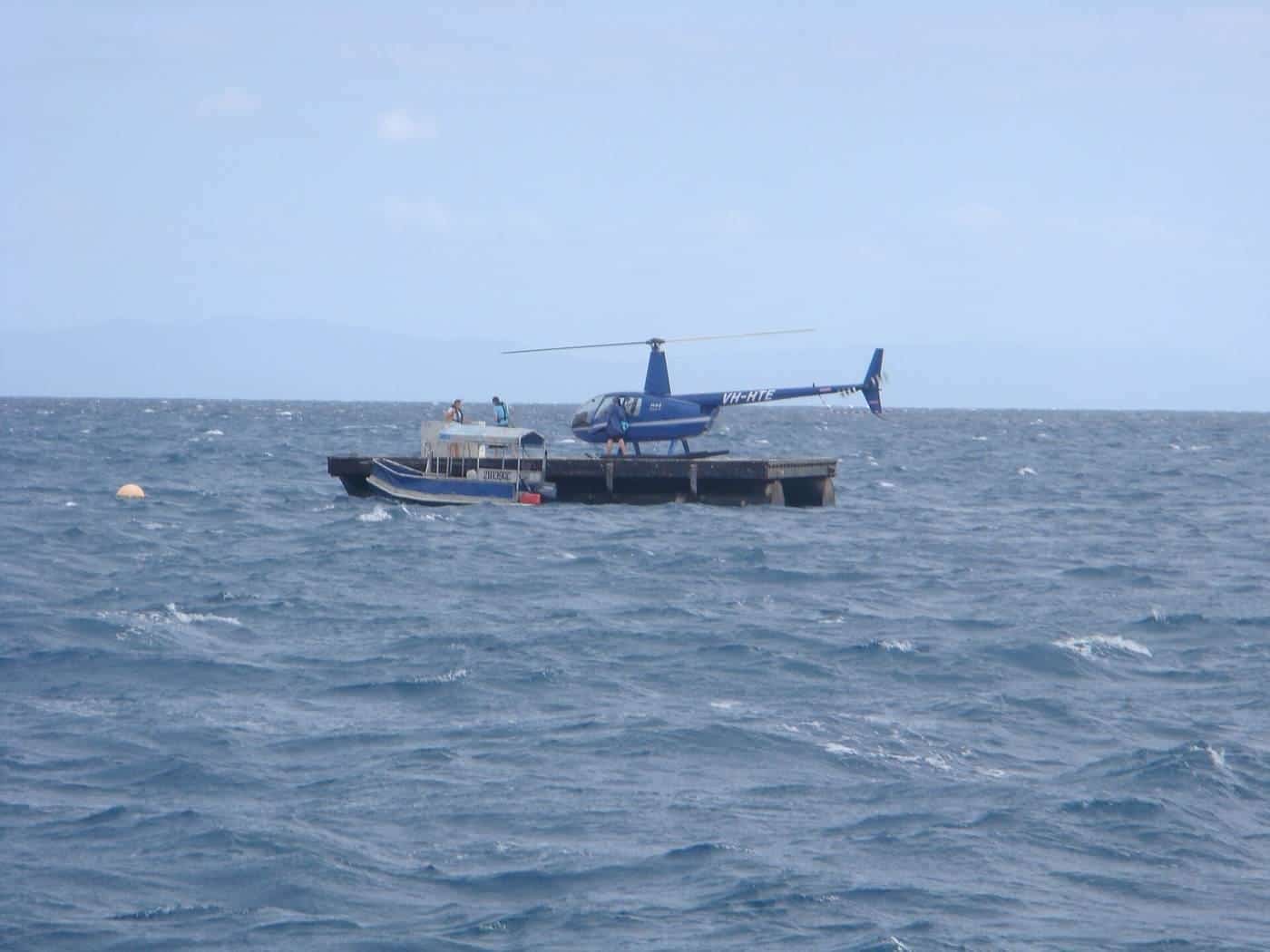
Pontoon landings, where they exist as a combined tourism product, are a marine operation plus an aviation operation. Ask which company holds which permission. CASA’s scenic-flight note about sellers versus flyers applies in spirit to pontoon partners too: name the flyer.
Misconceptions
Heart Reef is not a snorkel default. Hill Inlet is not guaranteed paint. Cairns is not Airlie. Dry season is not a certificate of sunshine. The marine park is not closed because you bought a ticket; you are a guest in it.
A packing list that is not a shopping list
Reef shirt, sunglasses with a strap, motion plan if you need one, water for after, and the operator’s own list. Leave the floppy hat. Leave the drone. Leave the assumption that Heart Reef is a pontoon.
If you are stacking a snorkel and a flight, decide which one can move. Coral does not care about your voucher expiry. Neither does a storm cell.
Ask whether the product is Whitsunday-iconic (Hill Inlet, Whitehaven, maybe Heart Reef) or Cairns-outer-reef. Write the answer in the same note as the minutes. That is the whole destination, operationally.
Write Hill Inlet or write outer reef, not ‘the reef’
Cairns outer-reef colour and Whitsunday icons are cousins, not twins. Heart Reef is an aerial protected shape, not a default snorkel. Tide owns Hill Inlet’s paint. GBRMPA owns the park sentence. Dry season is a planning hint. Name the landmarks in the same note as the minutes.
Field notes for people who book once
Treat this page as a briefing you can reread the night before money moves. Official sources still win if they disagree with a sentence we wrote last season: CASA for scenic air-transport rules, ATSB for public investigations, BOM for aviation weather, the park or marine-park manager for the ground, the ACCC for consumer-guarantee language. Operators win on the live AOC, the live minutes, and the live no-go.
Write four lines in your notes app: airborne minutes, named landmarks or landing, private or shared, AOC holder. If you cannot write those four, you are still shopping adjectives. Prices, which we will not invent, only make sense after the four lines. Weather slack is a fifth line that saves more holidays than a discount code.
On the day, the passenger job is small on purpose. Honest mass. Briefing. Walk when waved. Seat as assigned. Headset. Stay until waved off. Children hold hands. Nothing loose on the pad. No argument with a tail rotor or a cloud cap. If you freeze, say so. If you feel sick, say so. If the desk cancels, eat breakfast and use the clause you copied.
After you land, the place is still a park, a harbour, a marine park, or someone’s farm. World Heritage logos are conservation listings, not stunt permits. Walk where walking is the respectful way. Hydrate if the rest of the day is hot. Do not sprint to a restaurant you booked six minutes after a Southern Ocean slot. That is the whole method, from destinations/whitsundays-reef back to the home page and the FAQ.
Questions people ask
Why do people fly the Whitsundays?
To see Hill Inlet’s tidal sand patterns, Whitehaven’s silica beach from above, island geography, and reef colour that is hard to hold in one yacht’s-eye view. Heart Reef’s heart shape is an aerial view of a protected formation.
Can I land on Heart Reef?
Heart Reef is not a typical snorkel or landing stop. It is managed as a protected feature whose famous shape is seen from the air. Confirm what your product actually overflies and where, if anywhere, it lands.
When should I plan a tropical scenic flight?
The tropical north is generally more reliable for visual flying in the drier months, roughly May to October, in BOM climate terms. Wet-season build-ups, storms and flooding change the plan. The operator still decides on the day.
Sources and further reading
Facts on this page were checked against these primary and official sources. Conditions change — confirm before you travel or buy.
- Great Barrier Reef Marine Park Authority — Australian Government
- Great Barrier Reef — World Heritage — UNESCO
- Queensland.com — TEQ
- Bureau of Meteorology — BOM
- Scenic and joy flights — CASA
- Rules for scenic flights — CASA
- ATSB — Australian Government
- Whale watching settings — DCCEEW