Uluru–Kata Tjuta National Park is jointly managed by Anangu Traditional Owners and Parks Australia. UNESCO lists the place for natural and cultural World Heritage values. Tourism NT’s public story is the rock, the field of domes at Kata Tjuta, and the desert sky. A helicopter joins those three in one circuit if the product is written that way.
Climbing Uluru is closed. That is not a gap for aviation to fill as a stunt. Flying is a different activity, from a distance, under park and civil aviation rules.
Parks Australia
Joint management with Anangu
World Heritage, cultural and natural
Climb closed
Walk and listen instead
Flying is not a substitute climb
Heat
A real planning factor
Summer is severe on the ground
What you see
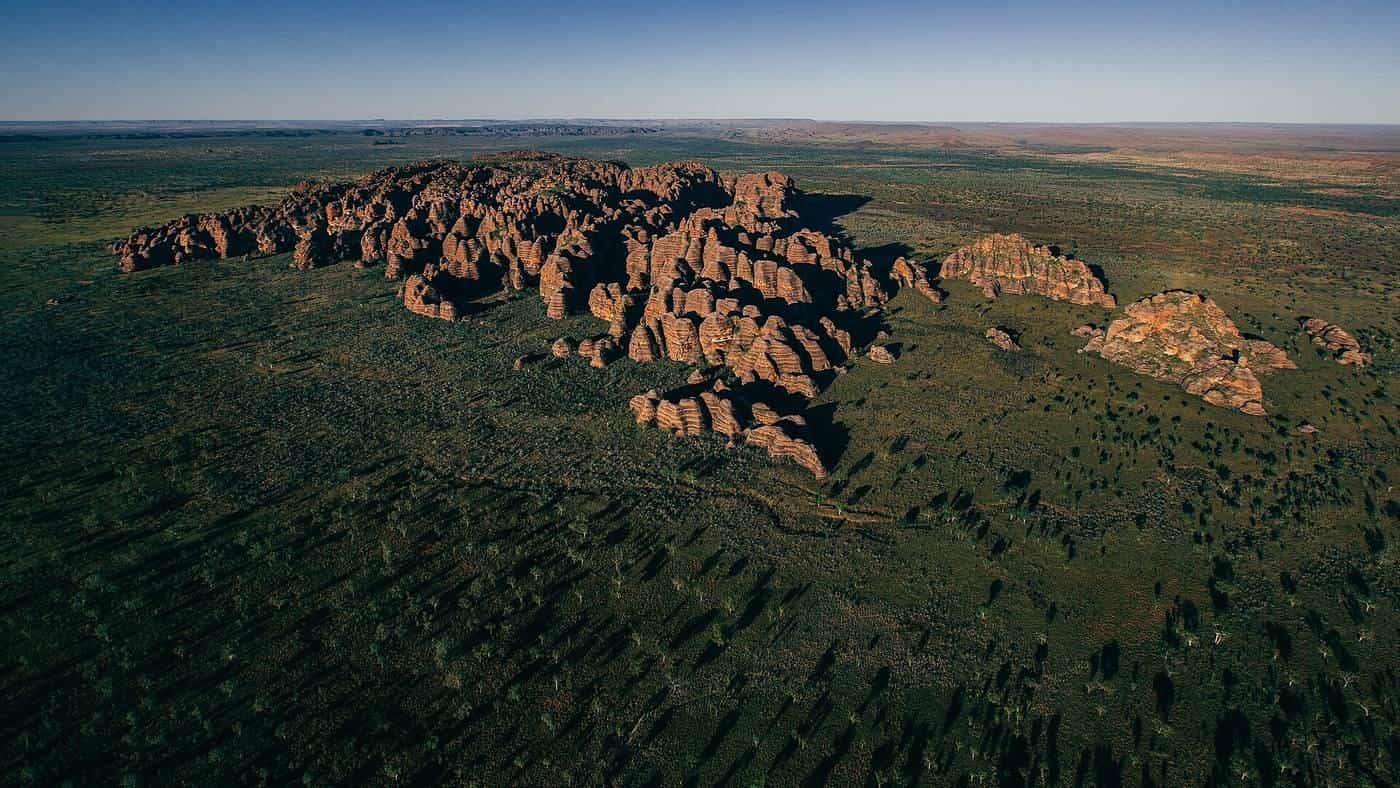
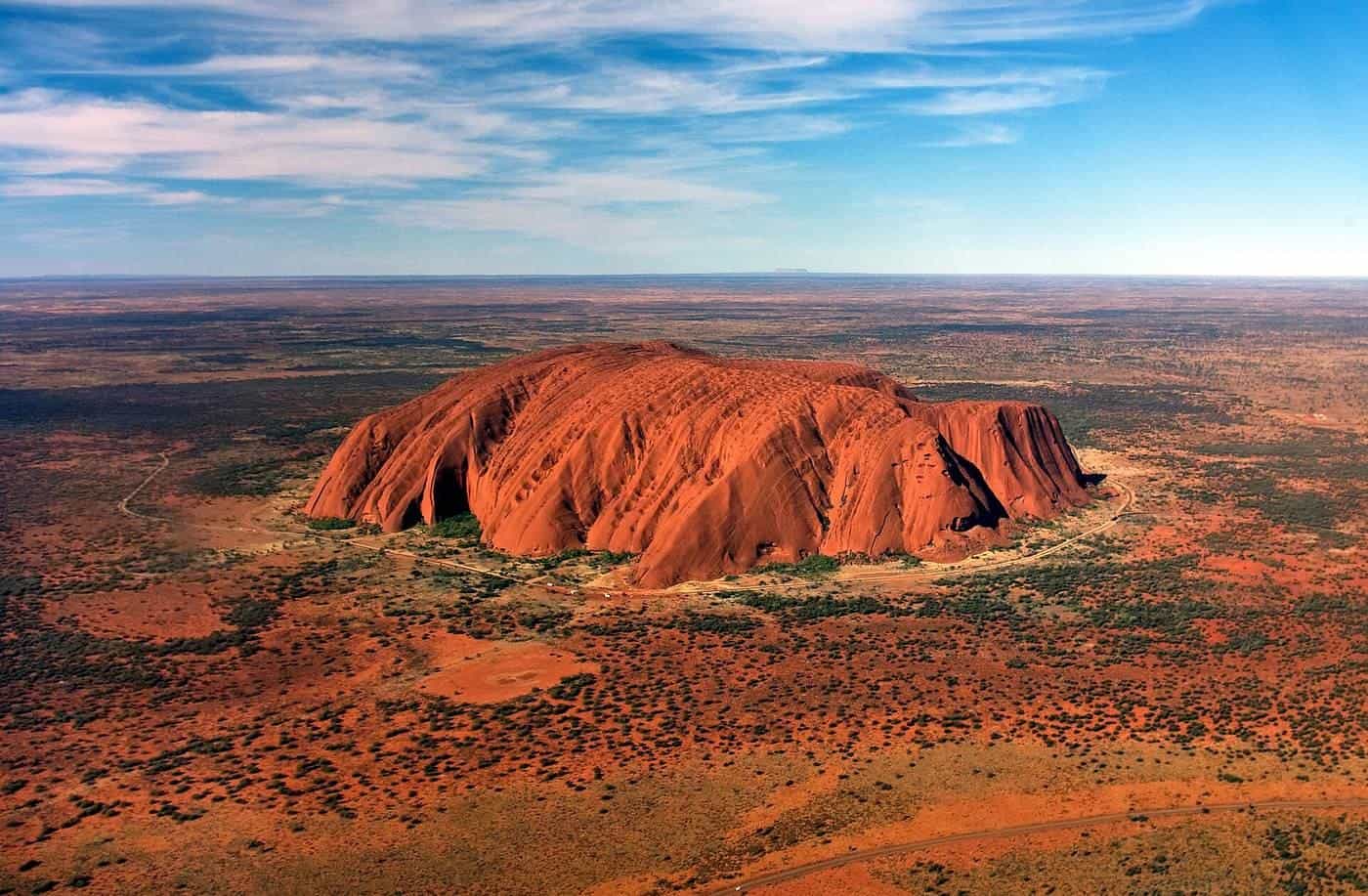
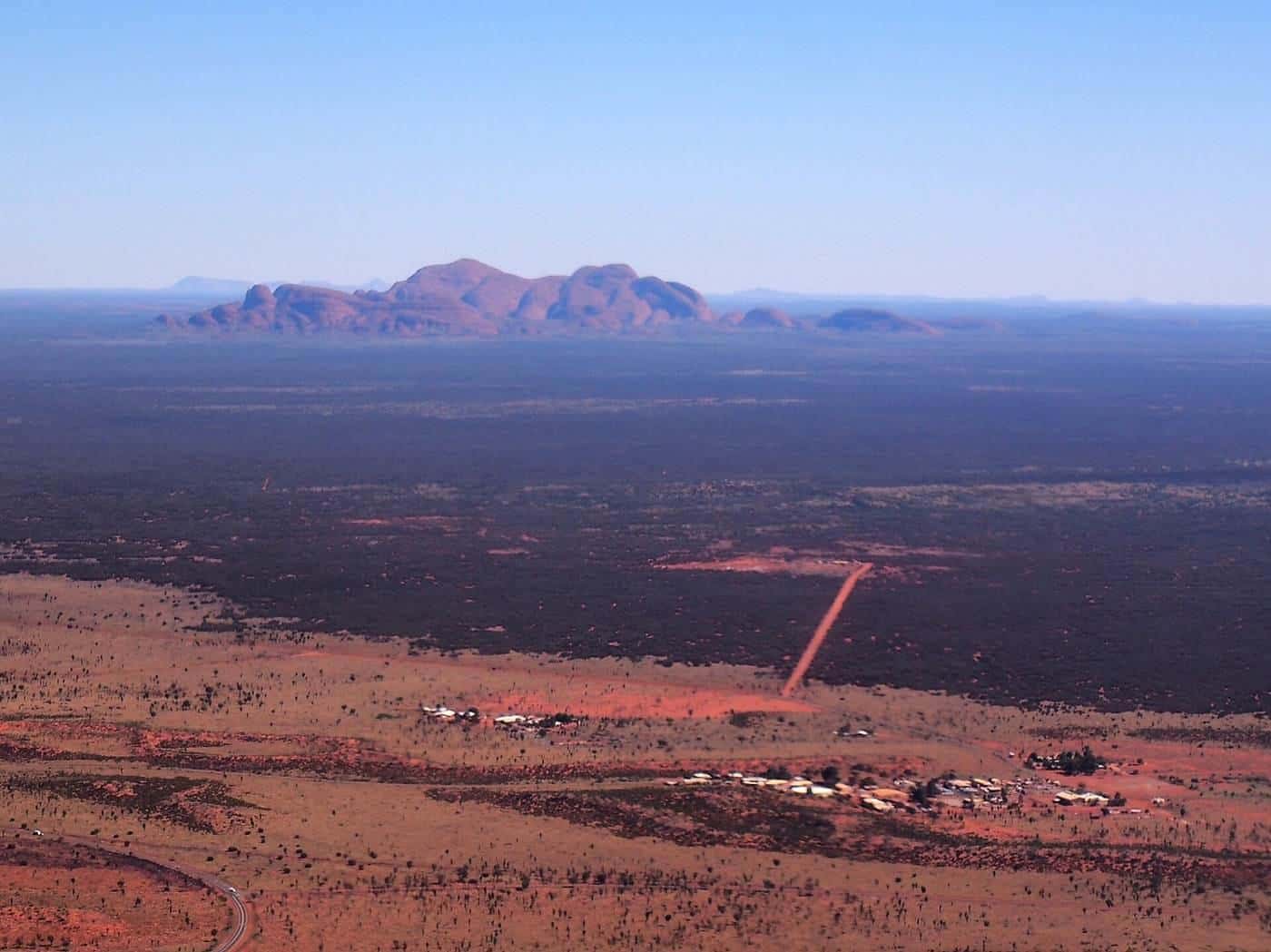
Uluru’s plan form — the way it sits as an oval mass rather than a wall — is the first surprise for people who only know the postcard face. Shadows in gullies move with the day. Water streaks after rain. Kata Tjuta (the Olgas) reads as many domes, which is why the air view is worth it even if you already drove to a lookout.
A short product may only orbit Uluru. A longer one adds Kata Tjuta. Desert colour at the edge of day is why sunrise and sunset slots sell; they also concentrate demand. We do not invent a “best hour” that pretends to override the operator’s roster and the park’s conditions.
Cultural respect
Parks Australia’s visitor information asks people to respect Anangu culture, including photography restrictions at some sites and the closed climb. A passenger briefing on a scenic flight should not treat the rock as a novelty cake. If a commentary sounds like that, you chose a poor cultural fit even if the AOC is in order.
This guide will not invent Tjukurpa stories. Those belong in authorised cultural interpretation — the park’s own programs and Anangu-approved tours.
Practical desert flying
Yulara and the Connellan airport area are the usual tourism base. How you get from hotel to pad is part of the product; a “flight” that needs a long transfer should say so. Dust, haze and thunderstorm build-ups are BOM-and-eyes weather, not vibe.
Weight-and-balance still rules in hot, high-density-altitude conditions. Accurate weights matter here as much as anywhere. Read weight and seating.
On the ground after you land
The air view does not replace the base walk, the cultural centre, or water and sun sense on park paths. Parks Australia publishes heat and hydration warnings because people still collapse on walks. A ten-minute helicopter flight is not training for a midday hike.
Comparing products
Minutes aloft, whether Kata Tjuta is included, time of day, transfer, cabin private or shared, and how the operator talks about culture. No prices here. No star table.
Uluru flight checklist
0 of 7 done
Ticks are saved in this browser only.
Key points
Fly Uluru for shape and desert scale. Treat Anangu and Parks Australia as the hosts. Close the climb in your head as well as on the rock. Then compare minutes and whether Kata Tjuta is actually on the route.
Walking, cultural interpretation, and flying — a civil order
If you can only do one thing at Uluru, many visitors would still choose a base walk and an authorised cultural interpretation over a helicopter, because the place is a living cultural landscape. If you can do two, the air view adds shape and desert scale that the walk cannot. If you try to replace the walk with a hover, you have misunderstood the park.
Parks Australia and Anangu did not close the climb so aviation could become a substitute summit.
Kata Tjuta is not a free extra
It is a different mass of rock to the west. Minutes and fuel decide whether it is on your sector. If the cluster of domes is why you came, buy the product that names Kata Tjuta. Photographers who only orbit the main face of Uluru still have a legitimate, shorter product.
Light without mysticism
Low sun makes relief. Midday flattens. Sunrise slots sell because of that, and because the air can be kinder. They also mean a dark, cold transfer in winter. Dress for the car park as well as the cabin.
Heat injury is a ground problem
Parks Australia’s heat warnings are about walks. People still collapse. Your scenic flight does not hydrate you. It may even tempt you to underestimate the afternoon. Carry water for the park, not only for the pad.
Photography restrictions
Some sites and ceremonies are not for cameras. Follow park rules and the briefing. Do not treat a helicopter window as a loophole.
Airstrip, resort, transfer
The tourism village and airport area are the usual base. How long the vehicle takes is part of the cost of the morning. A “short flight” with a long transfer is a long morning. Ask.
Who should skip
If the cultural framing of the operator feels like a stunt, skip. If the heat policy for your walking group is already on the edge, do not add a chaotic dawn. If you only wanted the climb, that product does not exist legally as a climb; do not shop for a dangerous substitute.
A sample decision
Two adults, June, interest in both rocks, one spare dawn: look for Uluru plus Kata Tjuta, check minutes, check transfer, read the cultural briefing notes. Family with small children who may not sit: talk to the operator about age and seats before paying for a dawn that becomes a refund conversation.
Key points
Uluru from the air is shape and desert. Anangu and Parks Australia are the hosts. Kata Tjuta is minutes, not magic. Heat is a ground truth. No climb.
Resort clocks and park clocks
The resort village runs on tour desks. The park runs on heat, culture and closing times. Your helicopter sits awkwardly between them. A dawn product that makes you miss an authorised cultural experience is a bad stack even if the air was smooth. Read Parks Australia’s day plan before you spend the dawn on rotors.
Misconceptions
Flying is not the closed climb. Kata Tjuta is not automatically included. The desert is not empty of people or meaning. A short orbit is not a cheap way to “do the park.” Water is not optional on the walking half of the day.
Respect as an operations problem
A briefing that names Anangu and Parks Australia is doing the job. A briefing that treats the rock as a cake is not, even if the orbit is smooth. You cannot audit Tjukurpa from a headset, but you can notice whether the company sounds like a guest.
If you buy sunrise, you buy a dark transfer and a temperature swing. Pack it. If you buy midday, you buy flatter light and more heat on the walking half. Parks Australia’s heat advice still applies to the half that is not airborne.
Kata Tjuta: on the route sheet or not. There is no secret complimentary dome.
Dawn is a transfer product as well as a light product
You are buying a vehicle in the dark, a temperature swing, and a slot. Pack both. Parks Australia’s heat and culture rules still own the walking half of the day. Kata Tjuta remains a line on the route sheet. The closed climb remains closed. Flying remains a guest activity on Anangu country, not a stunt substitute.
Parks Australia still owns the walking half
Uluru-Kata Tjuta National Park is jointly managed with Anangu. Parks Australia publishes heat, culture and closed-climb information because the rock is not a stunt park. A scenic helicopter orbit is a guest activity on that country. It does not reopen the climb. It does not automatically include Kata Tjuta. It does not replace an authorised cultural experience you stacked against a dawn transfer.
Ask whether the route sheet names Kata Tjuta. Pack water for the half of the day that is not airborne. If sunrise means a dark vehicle and a temperature swing, pack that too. Tourism NT can describe the landscape as a visitor drawcard. It cannot hold the AOC, and it cannot speak Tjukurpa for you. A briefing that names Anangu and Parks Australia is doing the job. A briefing that treats the rock as a cake is not.
Field notes for people who book once
Treat this page as a briefing you can reread the night before money moves. Official sources still win if they disagree with a sentence we wrote last season: CASA for scenic air-transport rules, ATSB for public investigations, BOM for aviation weather, the park or marine-park manager for the ground, the ACCC for consumer-guarantee language. Operators win on the live AOC, the live minutes, and the live no-go.
Write four lines in your notes app: airborne minutes, named landmarks or landing, private or shared, AOC holder. If you cannot write those four, you are still shopping adjectives. Prices, which we will not invent, only make sense after the four lines. Weather slack is a fifth line that saves more holidays than a discount code.
On the day, the passenger job is small on purpose. Honest mass. Briefing. Walk when waved. Seat as assigned. Headset. Stay until waved off. Children hold hands. Nothing loose on the pad. No argument with a tail rotor or a cloud cap. If you freeze, say so. If you feel sick, say so. If the desk cancels, eat breakfast and use the clause you copied.
After you land, the place is still a park, a harbour, a marine park, or someone’s farm. World Heritage logos are conservation listings, not stunt permits. Walk where walking is the respectful way. Hydrate if the rest of the day is hot. Do not sprint to a restaurant you booked six minutes after a Southern Ocean slot. That is the whole method, from destinations/uluru back to the home page and the FAQ.
Questions people ask
Why fly Uluru?
The air view shows the rock’s plan shape, the desert around it, and Kata Tjuta as a group of domes rather than a single silhouette. It is a complement to walking the base with cultural guidance, not a replacement.
Is flying over Uluru culturally appropriate?
Parks Australia and Anangu jointly manage the park. Climbing Uluru is closed. Overflights are a regulated tourism activity; operators are expected to follow park conditions and respect culturally sensitive areas. Ask the operator how they brief passengers on that.
When is it too hot?
Central Australia has extreme summer heat and cold winter dawns. Parks Australia’s visitor advice emphasises heat safety on the ground. In the air, density altitude and passenger comfort still matter. Morning products are often discussed for light and temperature — confirm with the operator.
Sources and further reading
Facts on this page were checked against these primary and official sources. Conditions change — confirm before you travel or buy.
- Uluru-Kata Tjuta National Park — Parks Australia
- Uluru-Kata Tjuta — World Heritage — UNESCO
- Northern Territory — Tourism NT
- Bureau of Meteorology — BOM
- Scenic and joy flights — CASA
- Rules for scenic flights — CASA
- ATSB — Australian Government