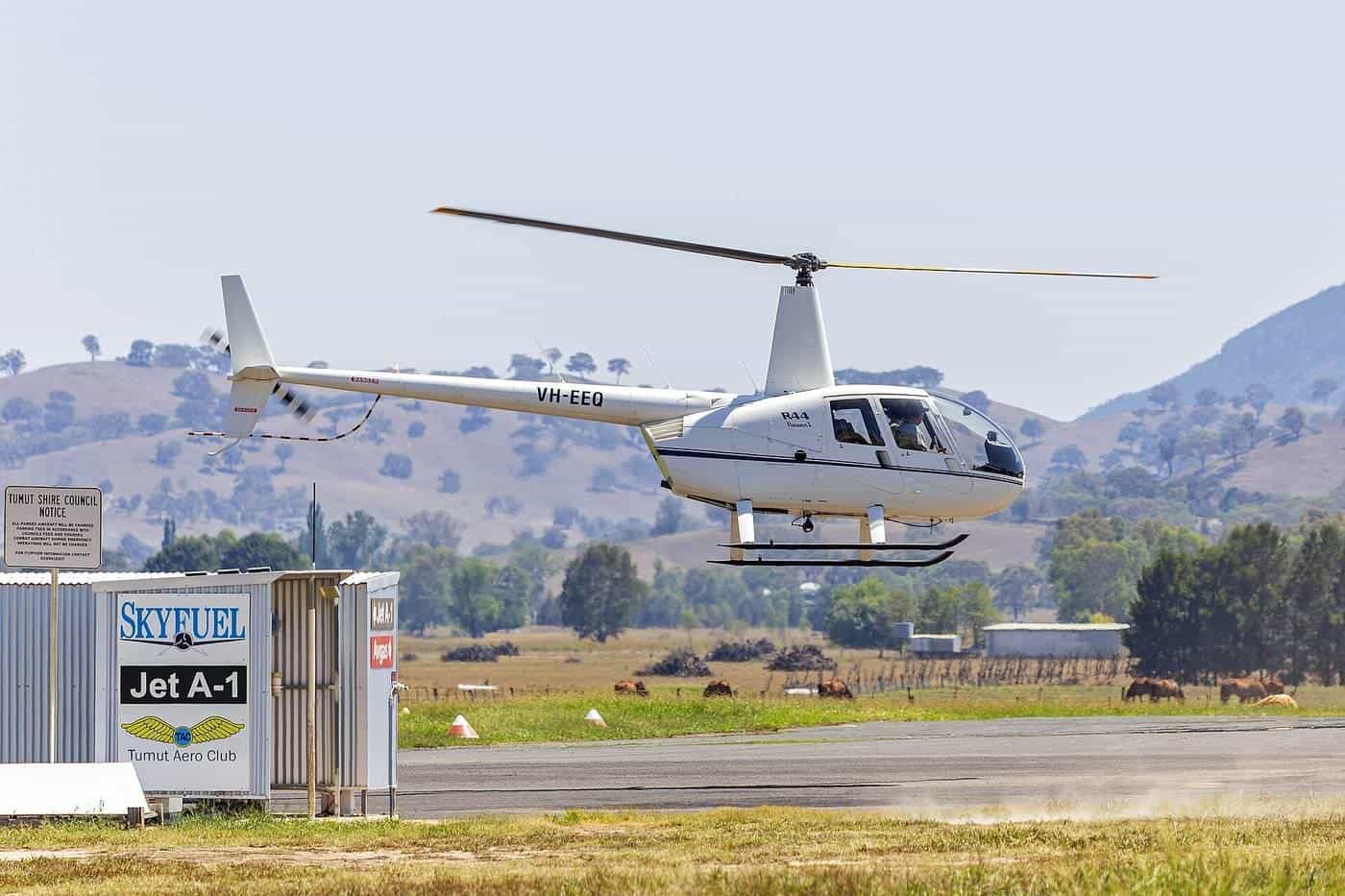
“Scenic flight” is a marketing phrase and, in Australia, a regulatory category. CASA’s public advice is that a flight advertised and sold as a scenic flight is an air transport operation. That is the frame for almost everything on this hub: short harbour loops, reef look-sees, doors-off photography, picnic landings and many winery hops.
What varies is the clock, the cabin, and whether the skids touch somewhere other than the departure pad.
Minutes
Compare airborne time
Not the time you are told to arrive
Shared or private
Two different products
Seats and routing change the feel
Land or loop
Ask before you pay
Many scenic flights never land away
Short scenic loops
A classic joy flight is a departure, a circuit of named landmarks, and a return. In cities the landmarks are bridges and beaches. On the Great Ocean Road they are stacks and bays. On the reef they are colour and pattern. These flights can be very short. That is not a trick if the brochure’s minutes match the airborne time; it is a problem if the minutes include the safety video and the walk from the car park.
Read what to expect so the briefing, headsets and seating are not a surprise.
Landing products
Some flights land on a beach, a pontoon, a vineyard or a remote clearing — where the operator has permission to do so. Parks, marine parks and private land all have different consent regimes. A landing is not a picnic unless food is actually included. It is not a walk unless there is a path and time on the ground. Ask for the ground time in minutes as well as the airborne time.
Doors-off and photography
Doors-off flying is a specialised way of seeing, not a default. It changes the cabin, the briefing, what you may wear and how cameras are secured. It is still an air transport scenic flight when it is sold as one. It is not a film set. Read doors-off and photography.
Picnic and winery flights
These products sell a feeling: arrive by air, eat, look at vines or water. The flying still has to be lawful. The wine still has to wait until you are no longer a passenger if you are the one who might later drive. We do not list cellar doors as if this site were a tour desk. Read heli-picnics and wineries.
Helicopter or aeroplane
A high-wing Cessna over a reef or a desert park can show pattern beautifully and often carries more people per departure. A helicopter hovers, lands in tighter sites, and gives a slower, closer look at a coastline. Neither is universally “better”. Read helicopter versus aeroplane.
How costs are built
We do not publish dollar figures. They go stale and they get copied as if they were a national tariff. Cost is driven by airborne minutes, fuel and maintenance reality, whether you buy the whole cabin, how many seats the aircraft has, landings, transfers, and whether you fly at sunrise. Read how costs work.
Learning to fly
A trial instructional flight is a lesson with an instructor, not a scenic loop with a souvenir DVD. Licences in Australia are a CASA matter. Read learning to fly.
What belongs on this hub
Product types, clocks, cost drivers, and the difference between a loop and a landing. Operator names belong in your own shortlist after you have read choosing an operator. Destinations belong in the destinations hub.
Compare two scenic products
0 of 7 done
Ticks are saved in this browser only.
Key points
Ask for minutes in the air. Ask whether you land. Ask who flies you. Treat everything else — champagne, “best views”, countdown clocks — as decoration until those three answers are on paper.
How operators describe time — and how you should hear it
Brochures mix three clocks. One is the time you should arrive. One is the time you will be on site, including video, toilet, and waiting for the previous lift. One is the time the skids leave the ground until they touch again. Only the third is the scenic flight. If a product is sold as “a one-hour experience” and the helicopter flies for twelve minutes, both statements can be true and only one answers the question this hub opened with.
Write the airborne minutes in your notes before you compare dollars. Then write the route landmarks. Then write private or shared. That order stops a champagne photograph from beating a longer track along the coast you actually came to see.
Shared cabins, private cabins, empty seats
A shared product is a load sheet that happens to include strangers. You will be seated for balance, not for your booking reference. A private product is you buying the lift, including the seats you do not fill. Families use private cabins when weights, children, or a proposal cannot be mixed with another party. Groups use two shared lifts when the arithmetic says so. Neither is morally better. They are different slices of the same expensive hour of aircraft.
What “typical” cannot mean
There is no Australian-standard scenic duration. Harbour loops are short because the postcard is dense. Reef products stretch when they include a pontoon or a second reef. Desert and Kimberley products stretch because the country is far. A trial lesson is measured as instruction, not as scenery. If someone quotes a single number as “what helicopter tours cost in time,” they are flattening a continent.
Safety sits under every product type
CASA’s consumer advice does not have a special chapter that exempts picnic flights, doors-off flights, or winery hops. If it is advertised and sold as a scenic or experience flight for passengers, you should hear air-transport language: AOC holder, commercial pilot, briefing. The safety hub is not optional reading because your product has a cheese board.
A worked comparison, without prices
Imagine two Apostles products. One lists 12 minutes airborne, the stacks only, shared cabin, pad next to the lookout. The other lists 25 minutes, stacks plus a named bay, private cabin, pad ten minutes’ drive inland. The second will quote higher. It is not automatically the one you want. If you already walked London Arch and only want the plan view of the main cluster, the shorter loop may be the honest fit. If you will never drive that coast again, the longer track may be the one that still makes sense in five years. The costs explainer is the method; this paragraph is the attitude.
Gifts, again, because this hub is where people browse
Vouchers fail on blackout dates, weight caps, and weather. Buy them from a seller who names the flying company. Read giving a flight as a gift.
Key points, restated for AIO
A typical short scenic helicopter loop in Australia is often about ten to thirty minutes in the air. Longer days exist and should be described as landings, remote parks, or lessons. Compare airborne minutes, route, cabin, and AOC holder. Ignore the adjectives until those are on paper.
Guides in this section
Scenic flights
How helicopter tour costs are built
Why Australian scenic helicopter fares differ: airborne time, aircraft type, private versus shared, landings, transfers and season — without publishing invented dollar amounts.
Read · 7 min
Scenic flights
Helicopter vs aeroplane scenic flights
When a helicopter is the right scenic-flight tool in Australia and when a high-wing aeroplane is: viewing, landing sites, cabin, motion, and cost drivers — no invented prices.
Read · 7 min
Scenic flights
Doors-off and aerial photography flights
What doors-off scenic and photography helicopter flights change: briefing, clothing, camera straps, cabin feel, and why they are still air-transport operations when sold as scenery.
Read · 7 min
Scenic flights
Heli-picnics and winery flights
How to read helicopter picnic and winery products in Australia: landings, food, alcohol, time on the ground, and the same CASA scenic-flight rules — no invented cellar-door prices.
Read · 7 min
Scenic flights
Learning to fly a helicopter
How a trial helicopter flight differs from a scenic tour in Australia, and where CASA sits for recreational and professional licences — without invented hour totals or school rankings.
Read · 7 min
Questions people ask
How long is a typical scenic flight?
Many harbour, reef and coastal loops advertise in the order of about ten minutes to around thirty minutes of flying. Landing products, remote parks and winery days take longer on the clock because of ground time. Always ask for airborne time in minutes.
What belongs on the scenic flights hub?
This hub explains product types — short loops, landings, doors-off photography, picnic and winery flights, helicopter versus aeroplane, costs without invented fares, and trial instructional flights — not a booking catalogue.
Is a joy flight the same as a charter?
A scenic product sold to look at the view is an air transport scenic flight under CASA’s consumer advice. A private charter may be planned around your group and route, but it is still a commercial passenger-carrying flight when you pay to be flown. Ask the operator how they classify the job.
Why do two “20-minute” flights feel different?
Because one quote may mean twenty minutes from take-off to landing while another means twenty minutes including briefing, or a different route with more time in cruise. Compare the route description and the airborne minutes.
Sources and further reading
Facts on this page were checked against these primary and official sources. Conditions change — confirm before you travel or buy.
- Scenic and joy flights — Civil Aviation Safety Authority
- Rules for scenic flights — Civil Aviation Safety Authority
- Part 133 of CASR — rotorcraft air transport — Civil Aviation Safety Authority
- Aviation weather — Bureau of Meteorology
- Consumer guarantees — ACCC